The best all terrain mobility scooter for getting outdoors
The same wish comes up at fitting after fitting, worded a dozen different ways. Riders are tired of feeling boxed in by smooth indoor floors and short stretches of pavement. They want to roll down a gravel driveway, cross a grassy yard to the garden, reach the far end of a park, or run an errand along a quiet street without the battery quitting halfway there. That is the whole job of an outdoor or all terrain scooter, and it is a genuinely different machine from the little travel scooter that folds into a car trunk.
The phrase "all terrain" gets stretched until it means almost nothing, so here is what it should mean. A true outdoor scooter needs grip from real tires, a way to soak up bumps, a little ground clearance so it does not scrape, enough range to get there and back, and decent lights for any riding near a road. Below I rank the three I trust most for outside, then I walk you through how to choose and how to ride one safely. There is a trade buried in all of this: the more capable an outdoor scooter gets, the heavier and harder to transport it becomes, so choosing well means being clear-eyed about how you will move it.
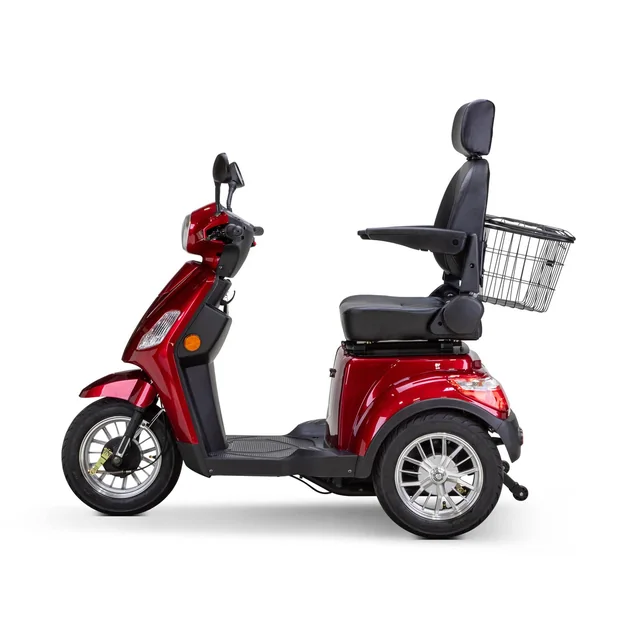
My top pick for the outdoors: EWheels EW-36
For riders whose real goal is to get out and cover ground, the EWheels EW-36 is the one I name first. It is a 3-wheel recreational scooter built for outside, and the spec sheet backs that up. It will go up to 15 mph, travel up to 40 mi on a charge, carry up to 350 lb, and it rides on air-filled tires with real suspension. That combination is rare at this price, and it is exactly what rough ground asks for.
Those numbers translate into something specific for a real rider. The air-filled tires and suspension matter far more than the top speed. They are what let you roll over a cracked sidewalk, packed dirt, or a bumpy park path without every jolt traveling straight up your spine. The 40 mi range means you stop doing nervous math about whether you can make it home, though plan on a bit less than the sticker once hills, cold, and your own weight enter the picture, which I break down in my guide to scooter batteries and real-world range. And the EW-36 is genuinely set up for riding near traffic, with full turn signals, a brake light, a headlight, and a mirror. The comfortable seat and headrest earn their keep on any longer outing.
The catch sits in transport. The EW-36 weighs about 215 lbs, ships fully assembled, and does not come apart, so there is no breaking it down to lift into a trunk. Moving it means a ramp and a hitch carrier on the vehicle, or you keep it at home and ride from your door. One more thing about that 3-wheel stance: it turns tighter and frees up legroom, but paired with a 15 mph top speed it asks for a confident rider who reads the ground ahead. If you want the fuller picture on wheel counts, see how I weigh three wheels against four. For anyone who needs the scooter to ride in a car, this is the wrong pick, and a travel model serves you better. For someone chasing real outdoor freedom from their own driveway, nothing else here keeps up.
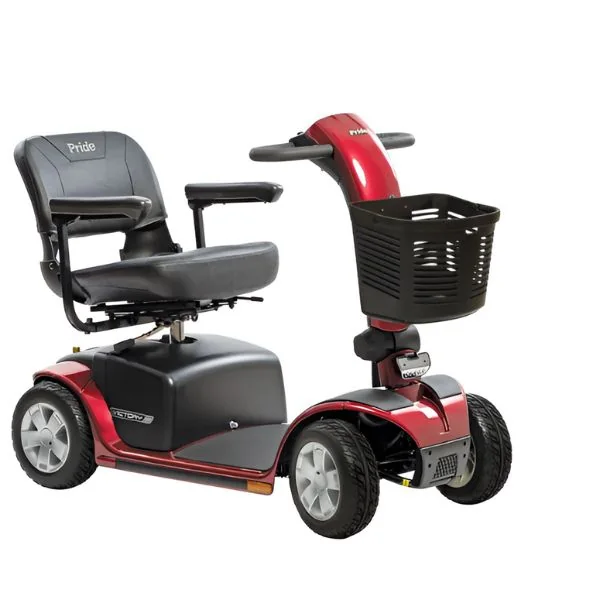
Runner-up for stability and load: Pride Victory 10
Second on my list is the Pride Victory 10, a full-size 4-wheel scooter that earns the spot on two strengths: its big tires and its strong frame. It runs on 10 in tires, carries up to 400 lb, the highest capacity in this lineup, travels up to 16 mi, and cruises at about 5.3 mph, a sensible walking-plus pace for neighborhood errands. That 400 lb ceiling is not only about heavier riders. A frame and motor built to handle that load feel planted and unbothered on uneven ground, where a flimsier scooter goes skittish.
The 10 in tires carry the day here. Bigger wheels handle bumps, lips, and small obstacles with far less drama than the tiny casters on a travel scooter. The Victory 10 also seats you on a large, comfortable chair, which counts when you are out for a while. Its four wheels give a wider, more reassuring base than the 3-wheel EW-36, and on slopes and curbs that steadiness is the whole reason some riders choose four, a tradeoff I work through in my piece on picking between three and four wheels.
Transport is the cost of all that solidity. The Victory 10 weighs about 185 lbs total, and while it does disassemble, the heaviest piece is 61 lbs. That distinction trips people up, so hold onto it: the piece you actually lift is 61 lbs, not the full 185. Still more than most people manage alone, and not something to wrestle in and out of a trunk daily. Treat the Victory 10 as a stay-mostly-at-home scooter that gets loaded with a helping hand on occasion, not a true travel machine.
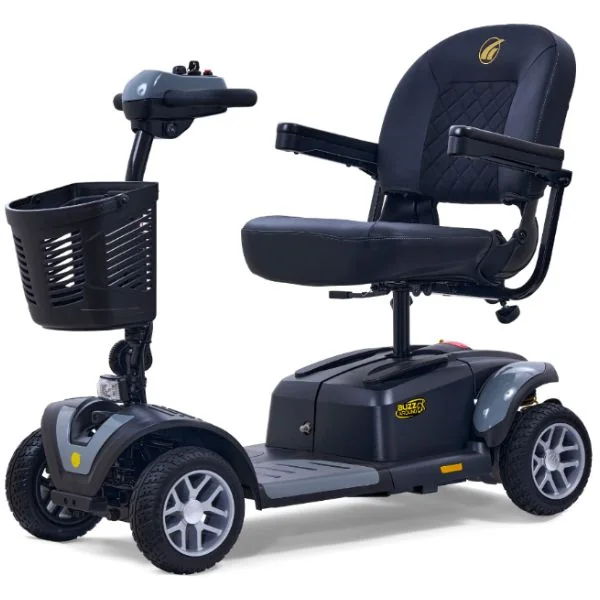
For ride comfort on uneven paths: Golden Buzzaround EX
Third in the conversation is the Golden Buzzaround EX. On paper it is a travel-class 4-wheel scooter, yet it outperforms that class for outdoor comfort thanks to front and rear suspension, 4 in of ground clearance, and bright LED lights. It tops out around 5 mph, goes up to 18 mi, and carries up to 350 lb.
Suspension at both ends is what wins me over for outdoor use. On a rougher path, that is what keeps a bump from landing as a sharp jolt, and for anyone with back or hip sensitivity that smoothing outweighs any speed figure. The 4 in of ground clearance lets it ride over a thick gas-station threshold, a small root, or an uneven curb cut without bottoming out and hanging up. Those bright LED lights keep you visible if dusk catches you heading home.
Limits are worth naming plainly. The Buzzaround EX will not chew through deep mud, loose sand, or steep wild trails, and frankly none of these three will. It is at its best on paved paths, packed gravel, firm grass, and around the block. Indoors it needs a slightly wider arc to turn than a tight 3-wheeler, so factor that into doorways and hallways. The full scooter runs about 161 lbs and comes apart into 5 parts, the heaviest piece around 53 lbs. Lighter to handle than the Victory 10, but a real lift all the same, so plan on help or a lift system rather than tossing it in the back of the car solo.
How they compare for outdoor use
Numbers side by side make the call easier. Here is how the three picks stack up on what actually counts outside.
| Scooter | Wheels | Top speed | Range | Capacity | Tires | Suspension | Comes apart? |
|---|---|---|---|---|---|---|---|
| EWheels EW-36 | 3 | up to 15 mph | up to 40 mi | 350 lb | air-filled | Yes | No, ships assembled |
| Pride Victory 10 | 4 | 5.3 mph | up to 16 mi | 400 lb | 10 in | No | Yes, heaviest 61 lbs |
| Golden Buzzaround EX | 4 | 5 mph | up to 18 mi | 350 lb | standard | Front and rear | Yes, heaviest 53 lbs |
Read it by your priority. Want speed, long range, and a ride that starts at your own door? The EW-36 wins, and you accept that it stays put. Need a steady, high-capacity ride on bigger wheels with help available to move it? The Victory 10 fits. After a cushioned ride on neighborhood paths from a model that still breaks down? The Buzzaround EX is the gentle middle. Notice that the slowest two here are the most comfortable for most outings, which is why I steer riders toward tires, suspension, and range rather than the top-speed number when they sit down to work out which scooter suits them. For frames built tougher still, browse my heavy-duty roundup.
What "all terrain" really means before you buy
Stores love the words all terrain, off road, and outdoor. Strip the marketing away and a short list decides whether a scooter handles the outside well. Top speed is not on it.
- Tires. Air-filled (pneumatic) or large solid tires absorb bumps and grip loose surfaces far better than the small flat-free tires on a packable travel scooter. This is the single biggest factor. Flat-free tires never puncture and need no upkeep, but they pass more of every crack into the seat, so the right choice depends on where you ride, something I lay out fully in my walkthrough on matching tires and clearance to your terrain.
- Suspension. Front and rear suspension turns sharp jolts into gentle rolls. Anyone with back, hip, or neck issues should rate this above almost any other feature.
- Ground clearance. A few inches of clearance lets you ride over thresholds, roots, and uneven curb cuts without scraping or getting stuck. Low travel scooters bottom out on the very same obstacle.
- Range. Outside, you cover more distance than you expect. Pick a range with comfortable margin so you are never stranded, and count on real-world numbers landing below the rating once hills, cold, and rider weight come into play.
- Lights and signals. Once you ride along any road edge, a headlight, brake light, turn signals, and a mirror become safety equipment, not luxuries.
Keep one limit in mind. Even the strongest of these is meant for paved paths, packed gravel, firm grass, and neighborhood streets. None is a deep-woods, deep-mud, or steep-trail machine, whatever a listing implies. To think the whole decision through for your own situation, I wrote a full walkthrough on choosing a mobility scooter.
An honest safety word on faster outdoor scooters
This part earns its place. A faster outdoor scooter like the EW-36, which can reach 15 mph, asks more of the rider than a 4 mph indoor model. It wants an alert, confident person at the controls. Near curbs, cars, pedestrians, and uneven ground, that speed leaves less time to react, and a heavier, faster machine takes longer to stop.
Be realistic about the rider's reflexes and confidence at 15 mph. If you are choosing for a parent, ask whether they would be comfortable braking quickly near a curb or a crowd. Good vision, steady reactions, sound judgment about traffic, and the physical ability to steer and brake firmly all matter. Where those are not solid, a slower, steadier scooter is the safer and kinder choice. I would far rather see someone happy and safe at 4 mph than nervous at 15.
A few habits I pass along every time: ride facing traffic on the road edge only where it is legal and necessary, use your lights and signals on every trip, wear something bright, ease off the speed on crowded paths and around blind corners, and take it slow until you truly know how the scooter behaves on a slope or a loose surface. Should a power chair suit the rider's needs better, I weigh the two against each other in my comparison of scooters versus power wheelchairs.
Compare our tested picks side by side, with real specs, photos and honest pros and cons.
Independent and reader-supported. Some links in our reviews are affiliate links that never change our rankings. How we test.
Frequently asked questions
What is the best all terrain mobility scooter overall?
For most people who want real outdoor capability, my top pick is the EWheels EW-36. It pairs air-filled tires and suspension with up to a 40 mi range and full lights, so it handles rough ground and road-edge riding well. The catch is that it weighs about 215 lbs and does not come apart, so you ride it from home rather than load it into a car. If you need something that travels, the cushioned Golden Buzzaround EX is a gentler choice that still breaks down.
Can a mobility scooter go on grass and gravel?
The right one can, within reason. Models with air-filled or large solid tires, suspension, and a few inches of ground clearance, like the EW-36 or the big-tired Pride Victory 10, handle firm grass and packed gravel far better than a small travel scooter. None of them is built for deep mud, loose sand, or steep wild trails. Go slowly the first few times on a new surface so you learn how your scooter grips.
How fast do outdoor mobility scooters go?
It varies a lot. Many comfortable outdoor scooters run around 5 mph, like the Buzzaround EX and Victory 10, while recreational models like the EW-36 can reach up to 15 mph. Do not chase the top number when you shop. Tires, suspension, range, and lights decide how well a scooter handles the outdoors, and a faster scooter needs an alert, confident rider who can react and stop safely near traffic and pedestrians.
How far can an all terrain scooter travel on one charge?
Among my picks, the EWheels EW-36 leads with up to 40 mi, the Golden Buzzaround EX offers up to 18 mi, and the Pride Victory 10 up to 16 mi. Those are best-case figures, not promises. Real range usually comes in lower on hills, in cold weather, and with a heavier rider, so pick a scooter with comfortable margin over your typical trip. I explain how range and charging really work in my battery guide.
Will Medicare pay for an outdoor mobility scooter?
I am not a doctor, so take this as general information. Medicare Part B may help with a scooter only when your doctor prescribes it for a medical need inside your home, and the paperwork rules are strict. Recreational and outdoor scooters like these are usually bought for getting around outside, which is typically not what that coverage is about, so I would not count on it. Talk to your doctor and read my plain-language guide on Medicare and mobility scooters before you assume anything.

I spent years helping older adults choose and fit mobility scooters, and I test these myself. I write every review and guide here, and I rank by what actually keeps a rider safe and independent, not by who pays the most. I am not a doctor. How we test →